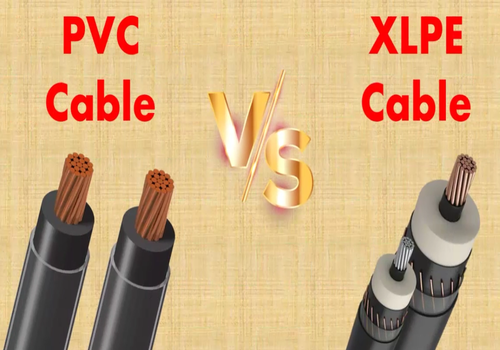
The primary distinction lies in the molecular structure:
PVC (Thermoplastic): PVC is a thermoplastic material, meaning it softens when heated and hardens when cooled. Its molecular chains are linear and not chemically bonded to one another.
XLPE (Thermoset): XLPE is created through "cross-linking." Using high pressure, chemicals, or radiation, the polyethylene molecules are tied together in a 3D lattice structure. This prevents the material from melting or becoming plastic, even under extreme heat.
This is where XLPE truly shines.
PVC: Typically rated for a maximum continuous operating temperature of 70°C. In short-circuit conditions, it can withstand up to 160°C.
XLPE: Rated for 90°C continuous operation. Because it is a thermoset material, it doesn't melt and can handle short-circuit temperatures up to 250°C.
Because XLPE can operate safely at higher temperatures, it can carry more current than a PVC cable of the same conductor size.
The Bottom Line: Using XLPE can often allow you to use a smaller cable cross-section to achieve the same power delivery, potentially saving on copper or aluminum costs.
Moisture Resistance: XLPE has a much lower moisture absorption rate than PVC, making it superior for underground or high-humidity environments.
Stress Cracking: XLPE is highly resistant to environmental stress cracking and chemicals.
Lifespan: Under standard conditions, XLPE cables generally have a longer service life due to their superior thermal stability.
| Feature | PVC (Thermoplastic) | XLPE (Thermoset) |
| Max Operating Temp | 70°C | 90°C |
| Short-Circuit Temp | 160°C | 250°C |
| Flexibility | High (Easier to bend) | Rigid (Harder to install in tight spaces) |
| Moisture Resistance | Moderate | Excellent |
| Environmental Impact | Contains Chlorine (Toxic fumes if burned) | Halogen-free versions available (Safer) |
| Cost | Lower (Initial purchase) | Higher (Initial purchase) |
Safety is a critical factor in building specifications:
Smoke and Toxicity: When PVC burns, it releases heavy black smoke and Hydrogen Chloride (HCl) gas, which is toxic and corrosive.
LSZH Options: While XLPE itself is safer, it is often paired with Low Smoke Zero Halogen (LSZH) jacketing for use in public spaces (airports, hospitals, tunnels) to ensure occupant safety during a fire.
You are working on low-voltage domestic wiring.
The project has a tight budget and low thermal demands.
You need a very flexible cable for easy routing through conduits and tight corners.
The cable will be buried underground or exposed to water.
The system requires high reliability and the ability to handle temporary overloads.
Long-term total cost of ownership (including maintenance and efficiency) is more important than the initial price tag.
While PVC remains the go-to for general-purpose, cost-sensitive indoor wiring, XLPE is the superior engineering choice for industrial, commercial, and high-load applications. Its ability to handle higher temperatures translates directly into better safety margins and long-term efficiency.
Contact: Lisa
Phone: +86-13775603923
E-mail: lisa@shengcable.com
Whatsapp:+8613775603923
Add: No.7577 of Hunan Rd., Pudong New Area Shanghai 201314, China