Electricity is an indispensable power source in both industrial production and daily life. However, while it brings immense convenience, improper use or inadequate maintenance can pose serious hazards. If you discover signs of an electrical leak in wires or cables in your factory or home, do not panic, but you must take immediate action.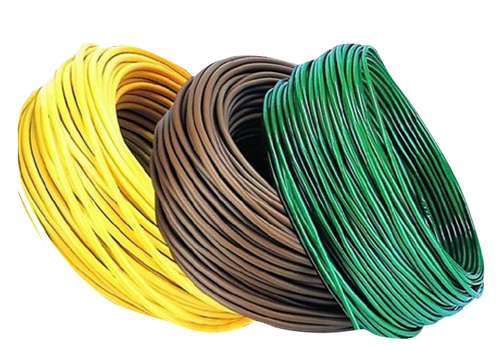
The moment you discover a leak, controlling the risk is your top priority:
Cut off the power immediately: Swiftly turn off the main circuit breaker or the residual current device (RCD) for the faulty circuit, and unplug any suspicious appliances. Never touch circuit breakers or wires with wet hands.
Isolate the hazard zone: Stay away from the point of leakage. Lay dry wooden boards or insulating mats on the ground to prevent electric shock from step voltage.
Stop using immediately: Do not use any electrical appliances on the leaking circuit until repairs are completely finished and the system has passed a safety inspection.
After powering off, we need to make a preliminary judgment about the source of the problem:
RCD (Residual Current Device) Reset Test: After the RCD trips, press the reset button and close the circuit breaker.
If it trips immediately again, it usually indicates a leak in the circuit itself.
If it does not trip, but trips the moment a specific appliance is plugged in, it means that appliance is leaking.
Segmented Power-Off Method:
Unplug all appliances, turn off the lighting switches, and then close the circuit breaker. If it still trips, it is a circuit issue.
If it does not trip, plug the appliances back in one by one. The appliance that causes the breaker to trip is the one with the leakage fault.
Insulation Resistance Check (Requires a Multimeter/Megohmmeter): While powered off, measure the resistance between the live/neutral wire and the ground wire (or a metal water pipe).
Residential standards ≥ 0.5 MΩ and industrial standards ≥ 1 MΩ are considered normal.
< 0.5 MΩ indicates a leak; close to 0 Ω indicates a severe leak.
Understanding the causes helps us better prevent them in the future:
Damaged Insulation: Wire aging, compression, bending, rodent damage, or accidental damage during construction drilling.
Moisture or Water Ingress: Cables in kitchens, bathrooms, or outdoors without proper waterproofing; poor sealing at joints or terminals.
Joint Faults: Loose wire connections, oxidation, poor contact, or failed insulation wrapping.
Overload and Overheating: Long-term operation under an excessive load accelerates the aging and embrittlement of the wire's insulation layer.
Poor Grounding: Broken, corroded, or loose ground wires, which prevent the effective diversion of current into the ground during a leak.
Troubleshooting should follow the principle of "from surface to inside, from simple to complex."
Visual Inspection: Check exposed wires for cracked outer sheathing, blackening, burn marks, or unusual odors. Inspect outlets/switches for water ingress, yellowing, or loose connections. Pay special attention to damp areas (kitchens, bathrooms, basements, outdoors) and junction boxes.
Segmented Troubleshooting (Narrowing the Scope): Turn off branch circuit breakers one by one. If shutting off a specific branch stops the main RCD from tripping, that branch has the problem. For long-distance circuits, you can disconnect them at junction boxes to test sections individually and pinpoint the fault.
Minor Damage (Copper core not exposed): After cutting the power, clean and dry the area. Wrap it with electrical tape in a semi-overlapping pattern for 5–8 turns, and secure it with heat-shrink tubing or yellow wax tubing.
Insulation Damage Exposing Copper / Leaking Joints: Cut out the damaged section, re-strip the wires, tighten or crimp the connection, and then seal it with heat-shrink tubing or waterproof electrical tape before restoring the wiring. (Note: Joints must be suspended and must never touch metal boxes or walls; damp areas must use waterproof junction boxes).
Moisture-Induced Leakage: For mild moisture, unseal the end and let it air dry naturally, or use a hair dryer on a cool/low-heat setting before resealing. For severe water ingress, you must cut out the water-damaged section and redo the waterproof joint or replace that segment of the cable.
Severe Aging / Multiple Damages: It is highly recommended to directly replace the entire section of the cable. Patchwork splicing is not recommended. For old wiring that has been in use for over 15 years, a complete system renovation is advised.
The job isn't done just because the repair is complete; verification and prevention are equally crucial.
Post-Repair Testing: Ensure the RCD does not trip when closed with no load. Confirm that the insulation resistance has recovered to ≥ 0.5 MΩ. Conduct a load test (turning on appliances one by one) to ensure there is no tripping or abnormal overheating.
Long-Term Protection Mechanisms:
You must install a Residual Current Device (RCD) with a trip current ≤ 30 mA and a response time ≤ 0.1 s.
Strictly adhere to codes in damp areas by using waterproof outlets and waterproof junction boxes.
Wiring must be routed through flame-retardant PVC conduits. Joints must never be directly embedded in walls; access panels must be left for maintenance.
Regular Inspections: For older homes, it is recommended to measure insulation resistance annually. Wiring that has exceeded its service life (10–15 years) should be replaced promptly.
Conclusion:An electrical leak is no trivial matter. Your very first reaction must be to cut off the power. All inspections must be thorough, repairs must comply with national and industry safety standards, and protective measures must be fully implemented. Whenever you are in doubt about your electrical circuit, remember: "It is better to cut the power and not use it than to risk making do." Contact a licensed professional electrician immediately to resolve the issue safely. Practice safe electricity habits to prevent disasters before they happen!
Contact: Lisa
Phone: +86-13775603923
E-mail: lisa@shengcable.com
Whatsapp:+8613775603923
Add: No.7577 of Hunan Rd., Pudong New Area Shanghai 201314, China