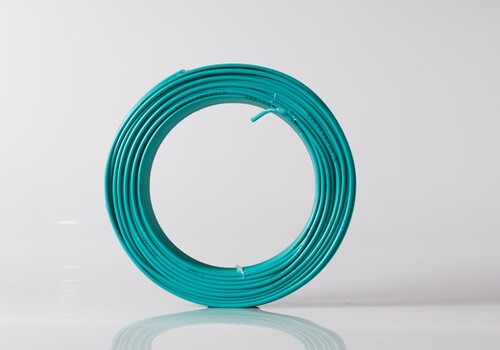
Electricity powers the modern world, but it carries inherent risks to both property and human life if mishandled. To ensure the safe, efficient, and reliable transmission of power, wires and cables are manufactured according to strict universal standards.
The color coding of cables is not a random aesthetic choice; it is a critical safety language. Its core purpose is to identify conductor functions, streamline electrical installation and maintenance, and prevent catastrophic accidents like electric shocks or fires caused by miswiring. However, different scenarios and regions dictate specific color rules. Whether you are wiring a commercial building or exporting machinery overseas, understanding these codes is essential.
Here is a complete breakdown of wire and cable color standards across different power systems.
Alternating Current (AC) systems are broadly divided into single-phase (primarily residential and light commercial) and three-phase (industrial and heavy power). In both systems, the colors for Neutral and Protective Earth (PE) conductors are strictly mandated and cannot be substituted.
Live / Phase (L): Commonly Yellow, Green, or Red. In newer installations, Brown is highly recommended to align with international IEC standards. The live wire carries the hazardous voltage (approx. 220V to ground), so its color is designed to be a highly visible warning.
Neutral (N): Must be Light Blue. This is the return path for the current and is grounded at the transformer, meaning its voltage to ground is typically near zero under normal conditions.
Protective Earth (PE): Must be Yellow-Green Striped. This is a globally recognized, dedicated color. It can never be replaced by solid yellow or solid green, and must never be used as a live wire. The PE wire is the ultimate "lifeline" of electrical safety, safely directing fault currents into the ground during equipment leaks.
Three-phase systems utilize three live wires. It is critical to maintain the same color standard throughout a single engineering project to avoid dangerous phase mismatches.
Phase Wires (L1, L2, L3): * Traditional Standard: Yellow (L1), Green (L2), Red (L3). Widely used in older domestic installations.
New / IEC Standard: Brown (L1), Black (L2), Grey (L3). This is the recommended modern standard, ensuring seamless alignment with international engineering practices.
Neutral (N): Light Blue, identical to the single-phase system.
Protective Earth (PE): Yellow-Green Striped, ensuring universal recognition for grounding across all systems.
Direct Current (DC) systems have distinct color codes and are increasingly critical in the age of battery storage (BESS), solar energy, and telecommunications.
Positive Pole (+): Brown is recommended, though Red is traditionally used. This aligns closely with AC live wire colors for easy polarity identification.
Negative Pole (-): Blue is recommended, with Black as a traditional alternative. This differentiates it clearly from AC neutral wires, preventing polarity confusion.
DC Mid-Wire (M): Light Blue, mirroring the AC neutral color to simplify identification.
Protective Earth (PE): Yellow-Green Striped, maintaining consistency with AC systems for foolproof leak protection.
Beyond standard power distribution, specific operational environments demand specialized color coding. Always consult the specific equipment manual alongside these general rules.
PEN Conductors (Protective Earth + Neutral): When PE and N functions are combined into a single wire, dual identification is required. The cable must feature Light Blue insulation with Yellow-Green markers at the ends, or be completely Yellow-Green with Light Blue markings along its length.
Fire Safety Circuits: Power lines for critical fire-fighting equipment and alarms frequently use Red jackets or utilize specialized fire-resistant cables to highlight their emergency function and facilitate rapid troubleshooting during crises.
Weak Current & Smart Infrastructure: In building automation and IT networking, a "primary + secondary" color combination is standard. Main colors (White, Red, Black, Yellow, Purple) are paired with secondary colors (Blue, Orange, Green, Brown, Grey) to quickly distinguish multiple twisted pairs in crowded server rooms (e.g., White/Blue, White/Orange).
For global EPC contractors and equipment exporters, understanding regional differences is a matter of compliance and safety.
Europe (IEC Systems): Closely matches the new standard. Three-phase live wires are Brown (L1), Black (L2), Grey (L3); Neutral is Blue; Earth is Yellow-Green.
United States (NEC Standard): Significantly different. Single-phase live is often Black, Neutral is White or Grey, and Earth is Green, Yellow-Green, or Bare Copper. Three-phase live wires are typically Brown, Orange, and Yellow. Extreme caution is required when integrating US and IEC equipment.
Australia, New Zealand, & Japan: Generally align with the IEC framework, utilizing Brown, Black, and Grey for phases, Blue for Neutral, and Yellow-Green for Earth.
Contact: Lisa
Phone: +86-13775603923
E-mail: lisa@shengcable.com
Whatsapp:+8613775603923
Add: No.7577 of Hunan Rd., Pudong New Area Shanghai 201314, China