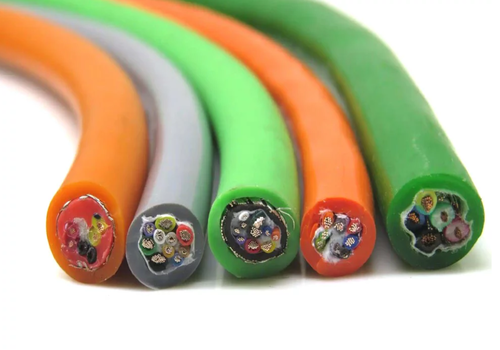
In the world of cable manufacturing, the debate between TPU (Thermoplastic Polyurethane) and PVC (Polyvinyl Chloride) is more than just a matter of price.
It is a choice between long-term reliability and short-term economy.
While they may look similar to the naked eye, their molecular DNA tells a different story. This guide breaks down the technical differences to help you determine which material will survive your environment and which will fail.
| Feature | TPU (Thermoplastic Polyurethane) | PVC (Polyvinyl Chloride) |
| Mechanical Strength | Extreme: Highly resistant to tearing | Moderate: Prone to stress damage |
| Abrasion Resistance | Superior: 3 to 5 times tougher than PVC | Fair: Wears down in dynamic use |
| Flexibility/Elasticity | Excellent: Rubber-like "memory" | Moderate: Lacks snap-back ability |
| Low-Temp Performance | Outstanding: Flexible at -40°C | Poor: Becomes brittle below 0°C |
| Chemical/Oil Resistance | High: Immune to oils and greases | Basic: Exposure leads to hardening |
| Environmental Safety | Eco-Friendly: Halogen-free; low smoke | Contains Halogens: Releases toxic HCl gas |
| Cost Investment | Premium: 2x to 4x higher than PVC | Economical: Most budget-friendly |
Contact: Lisa
Phone: +86-13775603923
E-mail: lisa@shengcable.com
Whatsapp:+8613775603923
Add: No.7577 of Hunan Rd., Pudong New Area Shanghai 201314, China