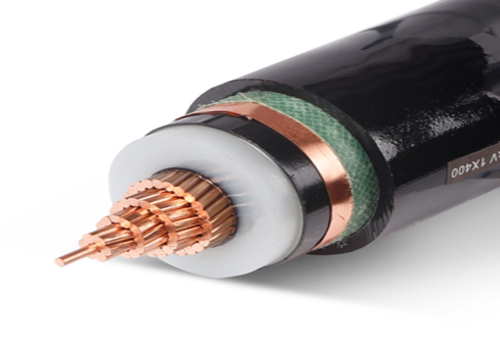
In the world of electrical engineering and telecommunications, proper cable installation is just as critical as the quality of the cable itself. Among the most crucial, yet frequently overlooked, installation metrics is the Minimum Bending Radius.
What exactly is it? The minimum bending radius is the smallest allowable radius at which a cable can be safely bent during installation or operation without causing structural damage, compromising electrical performance, or significantly shortening its service life. Cables cannot simply be bent into "dead corners" or sharp angles. The inner curve of the bend must always equal or exceed this specified value; otherwise, irreversible damage occurs.
Here is a deep dive into why adhering to the minimum bending radius is non-negotiable for any infrastructure project, and the international standards that govern it.
The core objective of establishing a bending radius limit is to protect the structural integrity of the cable, ensuring reliable performance and mitigating safety risks. Bending a cable too tightly triggers a domino effect of hidden failures:
Preventing Structural Damage: Modern cables are complex structures comprising conductors, insulation, shielding, armor, and outer sheaths. Excessive bending can cause internal conductors to deform or snap. It can tear copper or aluminum foil shields, crack the protective sheath, and even break heavy-duty steel tape or wire armor. Because this damage occurs beneath the jacket, it is often invisible during routine visual inspections but will steadily deteriorate over time.
Ensuring Signal & Electrical Integrity: For data and communication cables, over-bending increases crosstalk and insertion loss, shrinking bandwidth and spiking error rates. In fiber optics, it causes "micro-bending," leading to severe light signal leakage, reflection, or complete link failure. For power cables, physical deformation causes impedance fluctuations that disrupt the integrity of the electrical flow.
Avoiding Severe Safety Hazards: When a cable's insulation is compromised by a sharp bend, the risk of electrical leakage, short circuits, and even electrical fires skyrockets. Furthermore, a damaged shield in a control or communication cable leaves the system vulnerable to electromagnetic interference (EMI), which can trigger equipment malfunctions, costly production halts, or power outages—especially dangerous in heavy industrial or commercial building environments.
Maximizing Cable Lifespan: The long-term effects of ignoring bending limits are drastic. Industry stress tests reveal that when a cable is bent to a radius 50% smaller than the standard requirement, the lifespan of an XLPE (Cross-linked Polyethylene) insulated power cable drops by more than 60%. Over-bending severely accelerates the aging of the insulation layer, leading to frequent maintenance and costly early replacements.
To ensure global consistency and safety, bending radius requirements are strictly defined by international regulatory bodies. These limits are typically quantified as a multiple of the cable’s overall outer diameter (D).
For international projects and high-quality export cables, engineers rely on the IEC (International Electrotechnical Commission) standards:
IEC 61156-5 (2020 Edition): Focuses on symmetrical pair/quad cables for digital communications. It explicitly defines the bending radius requirements for horizontal wiring, ensuring data cables survive the twists and turns of modern commercial network installations.
IEC 60502-2: The go-to standard for medium-voltage power cables. It details the relationship between armor thickness and bending limits, stipulating that steel-tape armored cables generally require a minimum bending radius of 12D to 15D, providing a critical guideline for heavy infrastructure design.
IEC 60811-1-4: This standard governs the mechanical testing of cables. It outlines the exact testing procedures for bending radius and flex cycles, setting the definitive thresholds used in factory quality control laboratories to ensure cables can withstand real-world physical stress.
IEC 60331 & IEC 60332-3: These specialized standards focus on fire resistance and flame retardance. Within their comprehensive clauses, they include supplementary bending radius requirements specifically adapted for fire-survival cables, ensuring that these critical lifelines maintain their structural and electrical integrity even during emergency fire conditions.
A cable is only as reliable as its installation. By strictly calculating and respecting the minimum bending radius, engineers and contractors can prevent hidden structural failures, guarantee peak transmission speeds, and ensure decades of safe, maintenance-free operation.
Contact: Lisa
Phone: +86-13775603923
E-mail: lisa@shengcable.com
Whatsapp:+8613775603923
Add: No.7577 of Hunan Rd., Pudong New Area Shanghai 201314, China