In industrial automation and robotics, a cable is not just a static electrical conduit—it is a moving mechanical part. While a standard industrial cable sits safely in a tray, a robotic cable must endure millions of bends, twists, and accelerations while surrounded by harsh chemicals and electrical noise.
Choosing the wrong cable specification leads to shielding failure, conductor breakage, and costly assembly line downtime. Here are the critical specs you must consider.
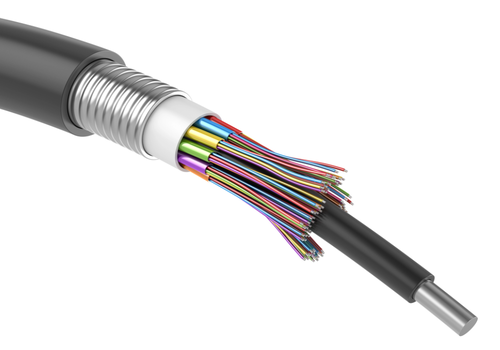
What goes inside and outside the cable dictates its lifespan under stress.
Standard cables use thick copper strands. Robotics cables require Class 6 ultra-fine copper stranding (per VDE 0295 / IEC 60228). Smaller individual wire diameters prevent the copper from work-hardening and snapping during repeated bending.
The outer jacket must withstand the factory floor environment:
| Jacket Material | Mechanical Strength | Chemical/Oil Resistance | Best Use Case |
| PVC (Special) | Moderate | Low to Moderate | Cost-effective; light-duty automation |
| PUR (Polyurethane) | High (Excellent tear/abrasion) | High (Mineral oils, coolants) | Cutting-edge machine tools, heavy-duty robotics |
| TPE (Thermoplastic Elastomer) | High (Great low-temp flexibility) | Very High (Bio-oils, welding slag) | Welding robots, outdoor or extreme-temperature automation |
Robots sit right next to servo motors and Variable Frequency Drives (VFDs) that generate massive Electromagnetic Interference (EMI).
The Problem: Traditional foil shields tear instantly under repetitive motion.
The Spec: Look for Tinned Copper Braid Shields with high coverage (typically $\ge 85\%$). For high-flex applications, the shield should be wrapped wrapped helically (served shield) or specifically optimized for torsion to prevent "bird-caging" (where the shield bunches up and cuts into the insulation).
When specifying cables for your next automation project, ensure your datasheet ticks these boxes:
Motion Type: Linear C-Track or Multi-Axis Torsion?
Bend Radius: Is the machine's cable track radius larger than the cable's minimum bend radius?
Approvals: Does it meet UL/CSA (for North America) or CE/RoHS (for Europe)?
Environmental Hazards: Will it be exposed to cutting fluids, welding sparks, or washdown chemicals?
Contact: Lisa
Phone: +86-13775603923
E-mail: lisa@shengcable.com
Whatsapp:+8613775603923
Add: No.7577 of Hunan Rd., Pudong New Area Shanghai 201314, China